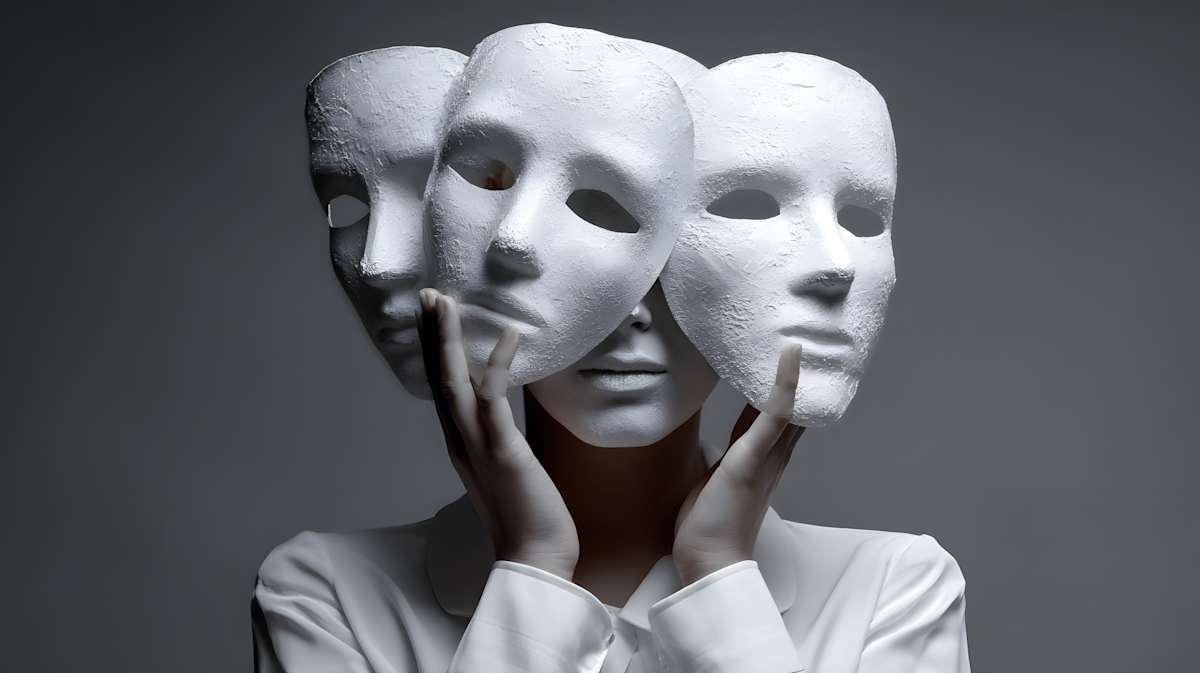
If you've ever felt like you're performing your own life instead of living it, you're not imagining it. Many of us learned, often early, to wear masks just to feel safe or accepted.
Some are obvious: the professional face, the strong one, the cheerful one who "has it together." Others are quieter and harder to name: the one who minimizes their needs, the one who keeps the peace, the one who never asks for help.
Most of us don’t consciously choose these masks. We learn them.
Often early.
We learn which parts of us are welcomed and which parts feel less safe to show. We learn what keeps us connected, avoids conflict, earns approval, or simply helps us get through the day.
And so, we adapt.
Masks Are Not the Problem
It’s important to say this gently and clearly:
The masks we wear are not a failure of character.
They are signs of wisdom and survival.
At some point in your life, each mask had a purpose. It protected something tender. It helped you navigate environments that didn’t leave much room for your full truth.
The mask of strength may have formed when vulnerability wasn’t met with care.
The mask of busyness may have emerged when rest felt unsafe.
The mask of being “easygoing” may have grown in rooms where your needs were inconvenient.
These adaptations made sense.
They still do.
When the Mask Becomes the Identity
The challenge isn’t that we wear masks, it’s when we forget we’re wearing them.
Over time, a mask can slip so seamlessly into our daily life that it begins to feel like who we are. We stop noticing the effort it takes to hold it in place. We stop listening to the quieter signals underneath, fatigue, resentment, numbness, longing.
We may appear functional. Responsible. High‑performing.
Yet feel strangely disconnected from ourselves.
Not broken.
Just distant.
This is often the beginning of the question many people carry quietly:
Who am I beneath all of this?
Gently Noticing the Masks You Wear
Removing masks doesn’t begin with tearing them off. It begins with noticing, without judgment.
You might gently ask yourself:
- Who do I become in different rooms?
- When do I feel most “on guard”?
- Which parts of me feel safest to show, and which stay hidden?
- What does it cost me to keep this mask in place?
Awareness is not a demand to change.
It is an invitation to listen.
Sometimes the simplest realization "Oh, this is something I learned to do to stay safe" , can soften years of self‑criticism.
Coming Home Is Not About Becoming Someone New
Healing isn’t about ripping away every mask or suddenly living “fully authentic” in all spaces. That kind of pressure often replaces one mask with another.
Instead, coming home to yourself is quieter than that.
It’s the gradual remembering that your worth does not depend on performance. That your presence does not need to be earned. That there is more to you than the roles you learned to play.
You don’t have to be unmasked everywhere.
You only need spaces, internal and external, where you can breathe a little more freely.
And sometimes, the first space where the mask softens is within your own awareness.
A Gentle Invitation
If you are noticing your masks more lately, that doesn’t mean something is wrong. It may simply mean something deeper in you is ready to be met with compassion.
Not fixed.
Not rushed.
Just welcomed.
You are allowed to take your time.
This reflection comes from the heart of my book, This Book Found You Because Your Soul Whispered, a gentle companion for those ready to explore healing without pressure or performance.